Bookworm in Taipei
TAIPEI, TAIWAN (MPI) — Call me a book whore. Paperbacks, hardcovers, even printed PDFs created from rough photocopies. My living spaces are wild with books, to my wife’s chagrin. I’ve often thought that instead of a gravestone or fancy mausoleum marking my bones, I’d prefer a bookshelf as my memorial. It would include formative influences like Haruki Murakami’s A Wild Sheep Chase, Paul Bowles’ Let It Come Down, Italo Calvino’s Invisible Cities, among others.
Some books are a form of time travel, their presence recalling the specific moments they entered my life. Found that Flann O’Brien in a shambling bookstore in Galway, Ireland in 2018, just before a pint, shepherd’s pie and folk music at The Front Door Pub. Located Georges Perec’s Life: A User’s Manual at Cody’s in Berkeley around 1992, the halcyon days of indie bookshops. Lifted that Kafka short story collection off the student bookstore shelves at Brown University in 1990, not realizing the copies were intended for a specific literature course (I wasn’t enrolled), the opening story “An Imperial Message” still giving me the chills, as does the memory of reading it at the student union, pizza scalding the roof of my mouth. Bought Paul Auster’s Hand to Mouth, the UK version with the austere gold monochrome photo of the author on the cover (austere Auster), at Eslite in Taipei in 1997.
Ah Taipei! My own period of austerity, from 1995 to 1998. As is usually the case when one is fresh out of college and living life, it was a challenging, bewildering and wondrous period. I worked in the southeast corner of town near the Taipei Zoo, sub-tropical vegetation beckoning at my office window, Taipei’s downtown and its mélange of signage, smog, and fried smells an hour away by bicycle or bus (I was too timid to do the foreign resident thing and get my own illegal motorized scooter). To quote Murakami, I had stumbled into a hard-boiled wonderland. Struggling to comprehend bus maps, beaten down by rain or heat or both, I often sequestered myself at home with Hong Kong movies or live American football games late at night on TV. So it went for my first year in Taipei.
Things changed in 1996. I moved to New Taipei City and a quieter, more spacious apartment in Shenkeng, a neighborhood known for stinky tofu. The tofu was indeed stinky but my apartment was high above it all, with a view of the Jingmei River snaking under spiraling highways and humpback hills. I was reconnecting with old friends, meeting new ones, a wider range of experiences taking hold: overnight hikes in the mountains, marathon tennis sessions and brunch on Sunday mornings, jazz evenings at the Blue Note and the Brown Sugar. It’s easy to regard the world of your youth with rose-colored eyes; you end up saying stuff like “Taiwan was in a better place when I lived there.” But Taiwan was in a good place in 1996—still underrated by the world at large, approaching economic and democratic maturity, even holding its first true presidential election. The latter led to Chinese fleet and missile exercises just off the coast, the mainland reminding its renegade province who it was fooling with. CNN International’s reportage on such tensions was far more hysterical than the mood in Taipei, as everyone carried on with carrying on. (With centuries of tragedies behind you, what’s a bit of political saber-rattling?)
That same year, the first local MRT train line in Taipei opened, the terminus down the road at the zoo. What was then called the Mucha line was (and still is) a rickety ride, the trains shaped like toys and bobbing around corners, nowhere near as speedy as the newer lines that now criss-cross the city. But at the time, efficient public transit was revolutionary. Just as with my new apartment, the elevated ride blessed me with a God’s-eye view; where once I was hemmed in by the buildings and the heat, I was now ascendant. New Taipei City, new trains, new life.
Most crucially, the Mucha line had a stop near the Eslite Bookstore. Back then, there was only one Eslite, a nondescript building amongst other buildings set back from Dunhua South Road, one of Taipei’s newer boulevards. Today a thick swathe of trees divides the lanes like a carpet of magic forest, but back then the trees were younger and fewer in number, and you could still see the opposite side of the street. The trees reflected Taiwan’s state at that moment: not quite there, but getting close.
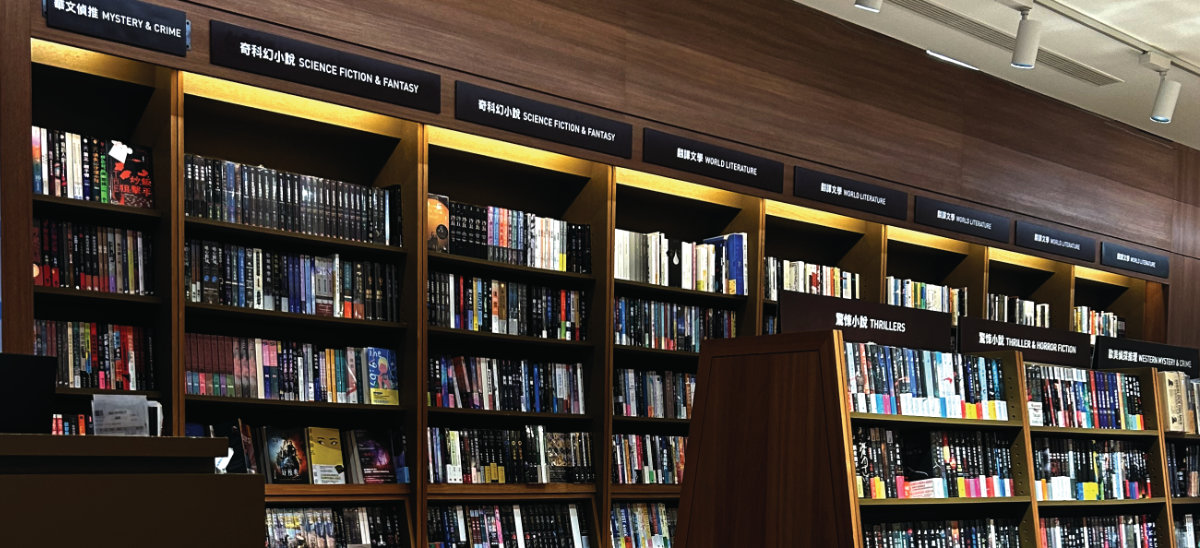
Eslite’s interior was all haloed lighting, dark wood paneling, and cathedral-like quiet (underscored by jazz and classical music) that was an antidote to the homey congestion of everyday Taipei. Books were arranged in library-like rows, the sight a clarion call to resume the literary life: the idea of being by oneself and outside oneself, catching a mental breath, engaging with others’ words and worlds, ideas begetting ideas. The bookstore’s name in Chinese (誠品), which roughly translates as “sincerity and cultivation,” gestured towards an ethos. It’s not just about books, it’s about a state of mind. Like any Barnes and Noble, Eslite carried bestsellers and glossy magazines, but other sections felt curated and considered, with whole walls dedicated to fine arts, humanities and social sciences, honest-to-goodness literature.
I came away from Eslite with hard-won treasures: Japanese manga translated into Chinese (perfect for language practice); familiar authors in blessed English but from non-US publishers, like Mr. Auster; the latest issues of Total Film and Q magazine, both British to the core (I forgave them their over-enthusiastic reviews of the latest James Bond movie and Oasis album); even pricey CDs that reflected the sophisticated air the store promoted, such as Jazz Pour Homme.
By the time I departed Taiwan in 1998, books from Eslite had become part of my existence, their specific spines and heft as familiar as my face in the mirror: The Avignon Quintet, The Tin Drum, Eugene O’Neill’s Collected Plays. These titles were joined by hundreds of others over the next two decades as I made my home in San Francisco. Which is not to say that the San Francisco book scene is flourishing—with dot-com and AI, how could it? For every City Lights or Green Apple Bookstore that persists, a half-dozen more have gone the way of the dodo, and much like mourning absent friends, I’ve grieved over the death of many bookstores over the years.
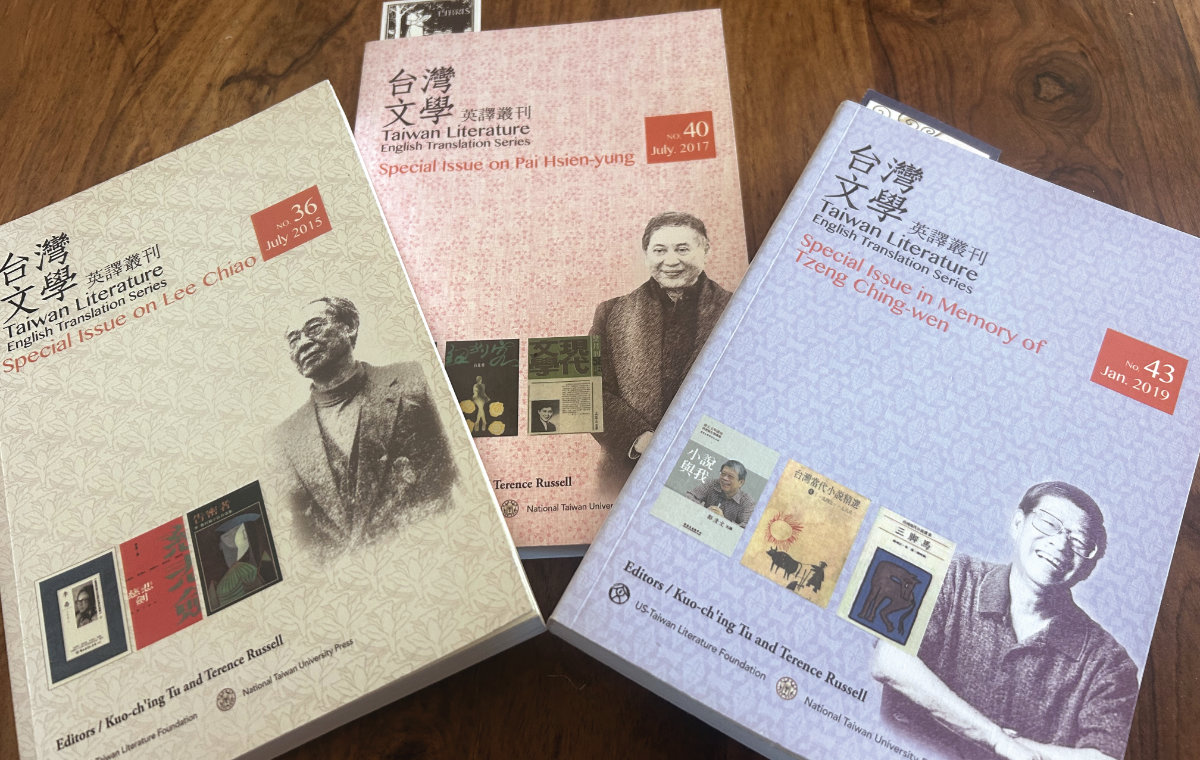
But if San Francisco was transitioning from book lover heaven to something more digitized, books were thriving in Taipei. Each time I returned there during the 2000s, Eslite was still around, only more so. The original Dunhua Road store was now open 24/7 (sleeping and waking amongst books, the literary life made flesh). An even larger multi-story branch had taken up residence in a steel tower in the Xinyi shopping district near Taipei 101, its windows aglow day and night. The Eslite brand was now a lifestyle: trendy stationery, specialty foods, home accessories like scent diffusers. Still, I scored my share of literary finds, as important Taiwanese writers like Tzeng Ching-wen, Pai Hsien-yung and Lee Chiao were now represented in English translation. Inside each Eslite the atmosphere was headier, the crowds relentless, private corners for settling down and reading harder to find.
Like Eslite, Taiwan was in fine fettle. It had elected a President from the Democratic Progressive Party, the political equivalent of giving mainland China the middle finger. The semiconductor boom was elevating the island’s standard of living. And yet Taipei still had an earthy feel to it, from the ever-present rain to the night markets and hole-in-the-wall restaurants where cash was the preferred currency. The city still had time for books you could hold, parks to get lost in, life lived at ground level.
Things have changed since then. One can go curmudgeonly about what’s long gone, or accept that existence is one big space and different forces inhabit it at different times. Sometimes the current stuff isn’t bad, like the new Burmese restaurants in San Francisco. Sometimes you must acknowledge that stuff that’s precious to you is now obsolete, like the thousands of VHS tapes and DVDs I’ve hoarded over the years, their visual and audio qualities way outdated.
The same with books: who has time to read anymore? Back in school thirty years ago, Cliff’s Notes were scoffed at; today, AI is proud to summarize books for you, to tell you only what you need to know about them, to catalog them like animal species or recipes. I still scour Green Apple and Moe’s in Berkeley for occasional used copies, but the heyday of physical books is long past. Austerity has hit us all, along with exhortations to be minimalist. My library has tipped towards pdfs and epub and mobi files and away from the physical stuff. It makes for cleaner organization, but scanning book titles in File Explorer on my desktop isn’t the same as perusing my literary history on my shelves. And the more I look at those shelves, the more I see that my history with printed books dwindles around 2017, as if I stopped living around then.
Last July I visited Taipei for the first time since before COVID. Primed for a book-buying binge, I listed Eslite on my itinerary; what I didn’t prepare for was the reality of the new now. In Taiwan, wages and population growth had stagnated. A Democratic Progressive Party humbled by scandals and a weakening economy held an uncertain grip on power. Mainland China still loomed, more implacable and threatening than ever. One night I met up with an old friend and one of her buddies at the Ningxia night market, wolfing down peanut ice cream wraps and different varieties of stinky tofu. My friend’s buddy was about my age and had shuttled between Taiwan and Silicon Valley his entire life. When I told him I lived in Taipei in the late nineties, he let out a sigh equal parts sorrowful and sentimental. “Oh yeah,” he said. “That was the best time to be here.”
Alas, not even Eslite has escaped post-COVID ennui. I learned that the Dunhua Road Eslite closed in 2020 after its lease expired; the Xinyi Eslite suffered the same demise in 2023. The only 24/7 mega-Eslite left standing is in Songyan near the Songshan Cultural and Creative Park, but as fate would have it, the day I planned to visit was scuttled when a typhoon shut down most businesses. (Taiwan, forever the land of heat and rain.) The only Eslite locations I set foot in were letdowns: an underground Eslite near the entrance to the Zhongshan MRT station, a few rows of desultory shelves crammed into a narrow slice of mall real estate; an Eslite Spectrum store a few blocks away, five floors of fashion and fancy accessories and wan little craft items. The same went for the Eslite located in Ximending, Taipei’s answer to Shinjuku. No one was there for books; they all herded downstairs to the basement food court. But that’s today’s Taipei for you. Old spaces, new stuff.
I shouldn’t get bitter; it’s been thirty years since 1996, and one can’t expect things to remain the same. Taipei still has handmade, bespoke qualities to it, but bespokeness is now reserved for coffee culture, keychain tchotchkes, retro-trendy clothing, upscale tofu pudding. Places like the Brown Sugar have disappeared in favor of bookstore cafes, where the fruit smoothies are fine and the books nondescript. And yet, if Taipei is more digital than it used to be, it remains tactile, with its own differentiating sights, sounds and smells: the overpowering scents of a night market, the massing of cicadas in the hills just beyond downtown, sunset falling over temples and low-slung skyscrapers, the world gaining elegance after dark.
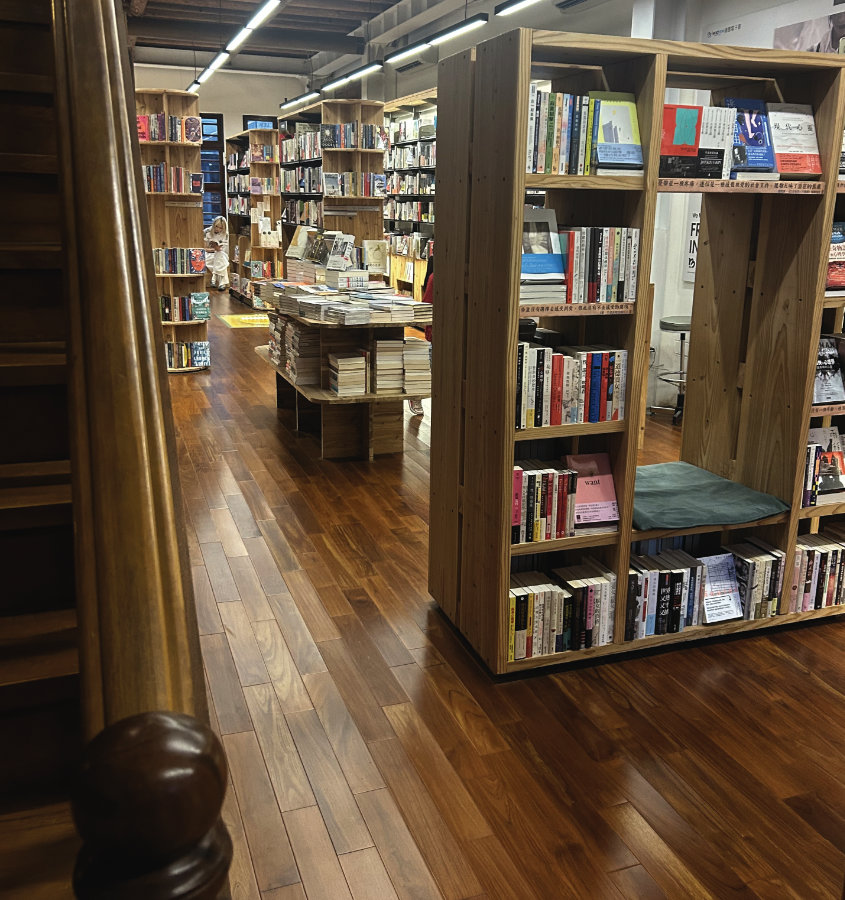
Even if the literary life is fading in Taipei, echoes remain. One cloudy afternoon I ambled down Dihua Street, a charming assortment of souvenir traps and stores selling dried fruits, medicinal herbs and striped mesh tote bags. Right in the heart of it is Kuo’s Astral Bookshop. The red-brick rowhouse dates to 1922 and sold groceries and dry goods during Japanese colonial times; in 2022 the grandson of the original owner resuscitated it as a bookstore. I’ve read that the “astral” in the store’s title is meant to signify dreamlike qualities, and stepping into the store, one can understand. Eslite is built to impress with cosmopolitan grandeur; Kuo’s is meant to be a hideaway, its narrow stairs and homey shelves curling up and around like a fortress, warding you off from life and its distractions. Its three womb-like floors are organized by theme: Taiwan-focused literature and non-fiction on the ground floor, a generous sampling of world lit on the second, and a third floor for aesthetes, featuring poetry and art books.
A book and a place to read it:
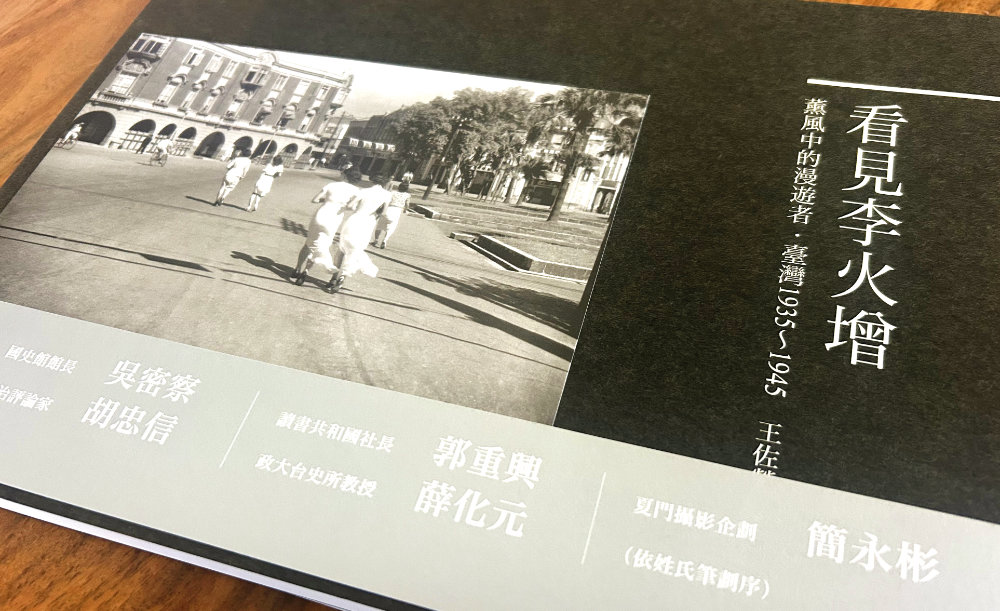
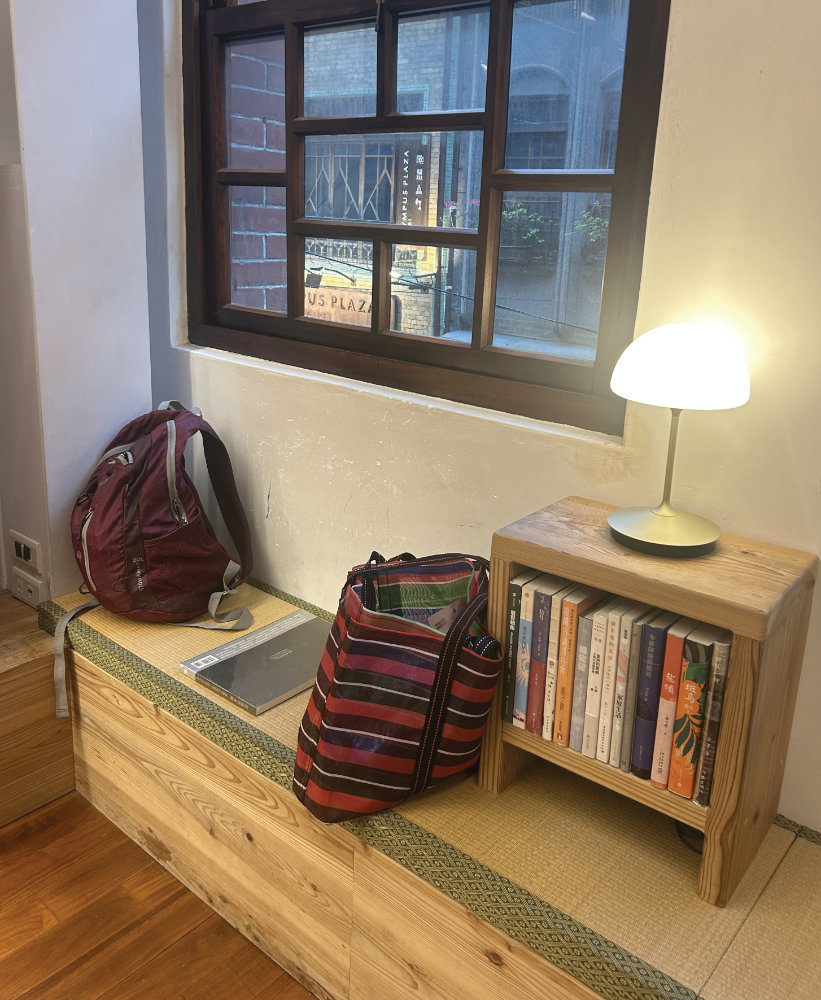
My favorite find was on the third floor: a collection of Li Huozeng’s photography titled A Wanderer in the Gentle Breeze (an apt moniker for artistic nomads of all nations). Inside were images taken between 1935 and 1945, during Japanese colonial rule in Taiwan: peddlers and their wares spread out in the heat of midday, schoolchildren raising flags of the Rising Sun, women in qipao or kimonos caught in motion and contemplation, questioning the camera with a stare or looking askance with a shy smile. Settings and accoutrements have changed but the photo subjects’ faces are familiar, caught in the act of keeping on, just as we keep on. Every time I look at the cover of A Wanderer in the Gentle Breeze I recall that afternoon at Kuo’s, heavy rain slicing through the afternoon and ruffling the thoroughfare outside. A well-lit nook awaited me next to a window, perfect for sitting, reading, contemplating and waiting, and I did just that for the next hour. New things in old spaces.



Ho Lin is a writer, musician and sometime filmmaker who resides near San Francisco. His books include China Girl and Other Stories and Bond Movies: A Retrospective. He is also co-editor of Caveat Lector magazine. [Author website]